Beware of garlic, not of vampires
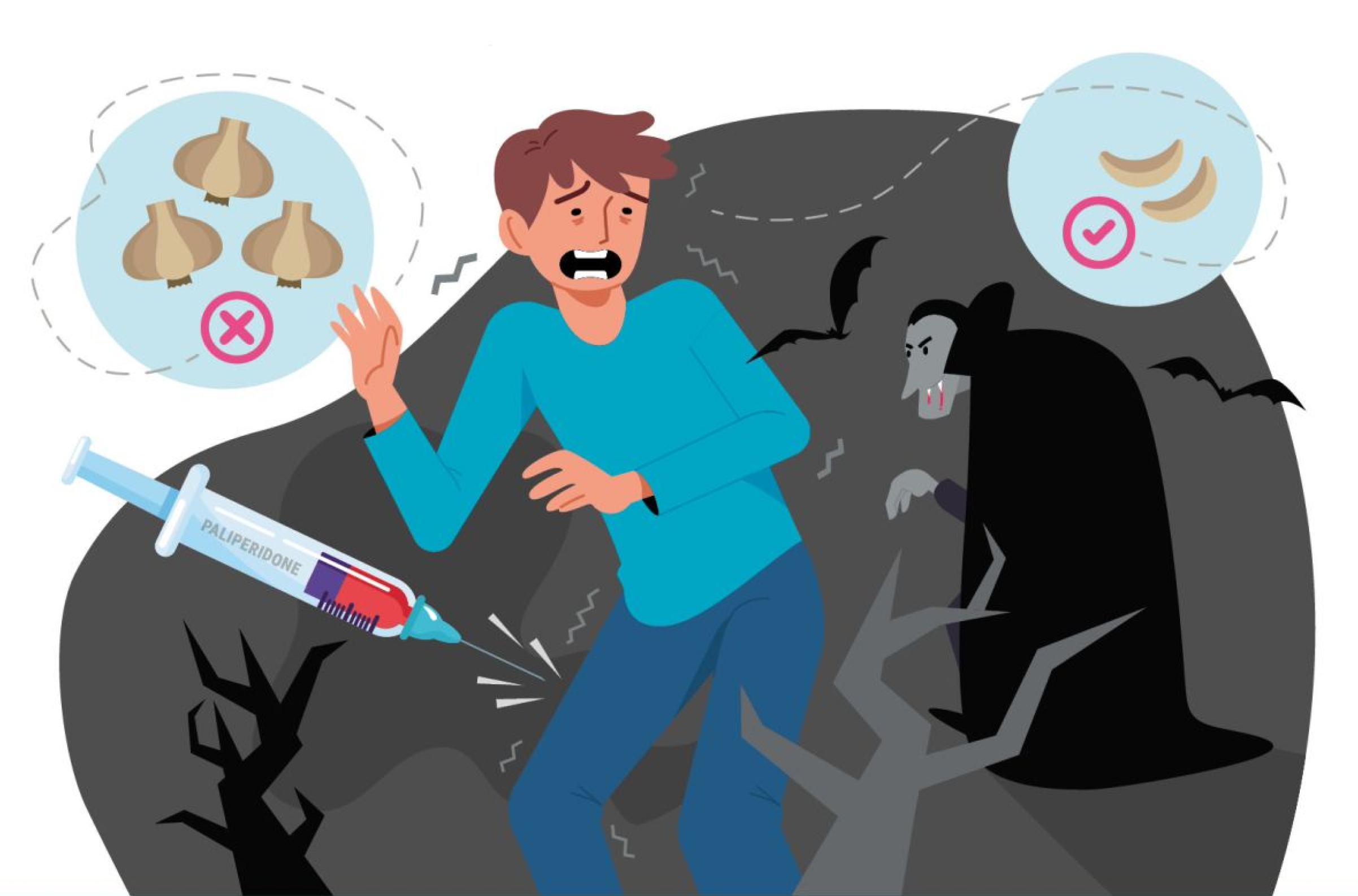
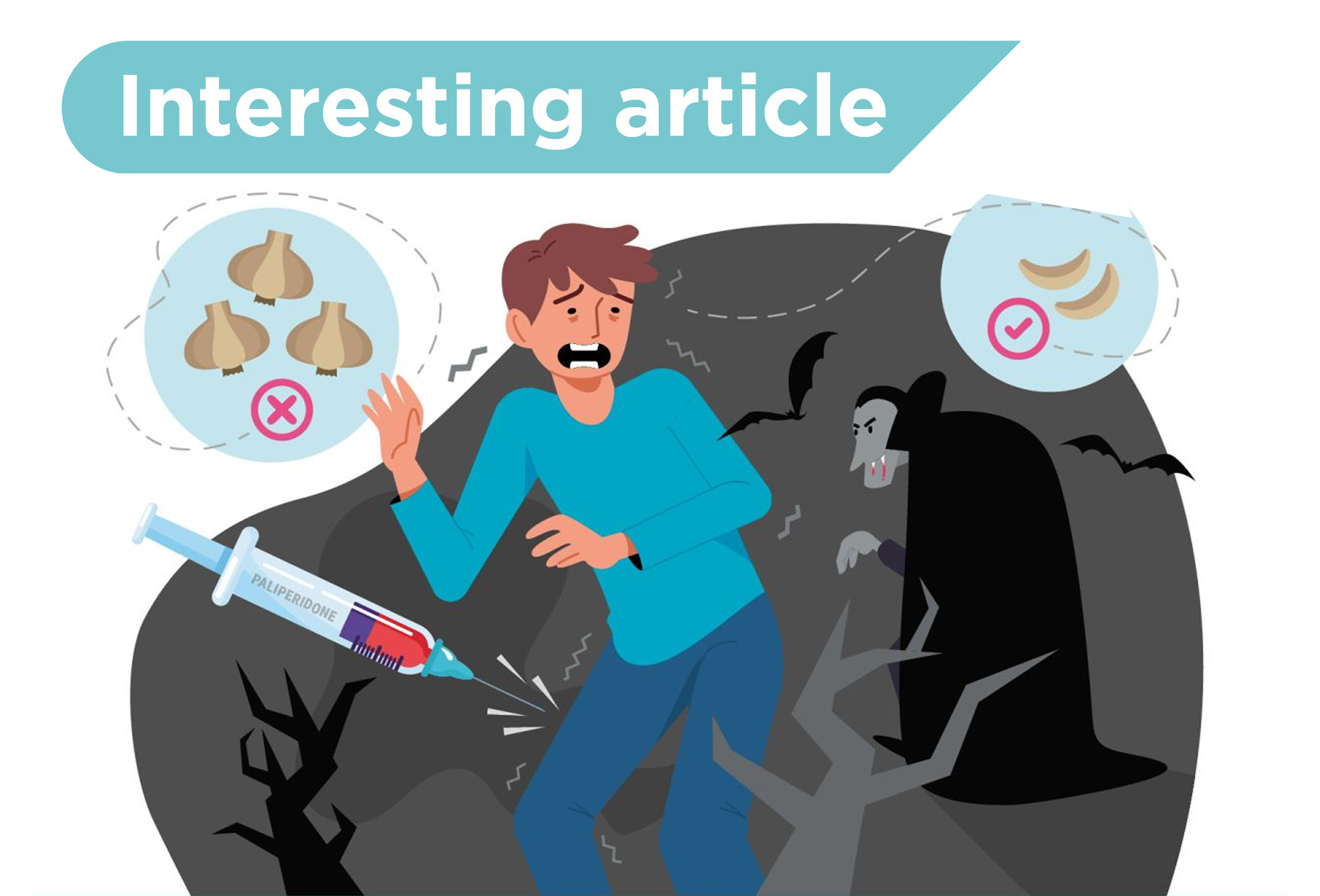
A 49-year-old male patient with schizophrenia 🧠 and a delusional belief that he was transforming into a vampire was consuming up to 3 heads of garlic per day as a protective measure — and this turned out to have a significant pharmacological consequence. 🧄
The patient was diagnosed with schizophrenia 🧠 and posttraumatic stress disorder ⚠️ with dissociative symptoms, and a persistent personality change following extreme stress. He expressed a specific and persistent fear of vampires coupled with the delusional belief that he was transforming into one, perceiving himself as a potential threat ⚡ to both himself and his family 👨👩👧.
He had a long-standing history of schizophrenia 🏥 with recurrent hospitalizations due to psychotic exacerbations, despite receiving long-acting injectable antipsychotics 💉. Because of the inexplicably low serum paliperidone concentration 📉, the hospital’s clinical pharmacy service 👩⚕️ was consulted. It was noted that the patient was consuming exceptionally large quantities of garlic (up to 3 heads per day).
Scientific takeaway: 🧠
The clinical pharmacists suspected a potential drug-food interaction 🍽️ between paliperidone 💊 and garlic and recommended discontinuing excessive garlic intake. Garlic is known to induce P-glycoprotein and drug-metabolizing enzymes, potentially reducing paliperidone bioavailability.
Unofficial takeaway: 😅
With only 2 cloves of garlic daily, the patient achieved a stable psychiatric state 😊. The irony? The very remedy he used to ward off vampires was undermining his ability to stay mentally stable. Sometimes the real danger isn’t what you fear, but what’s on your plate. 🧄
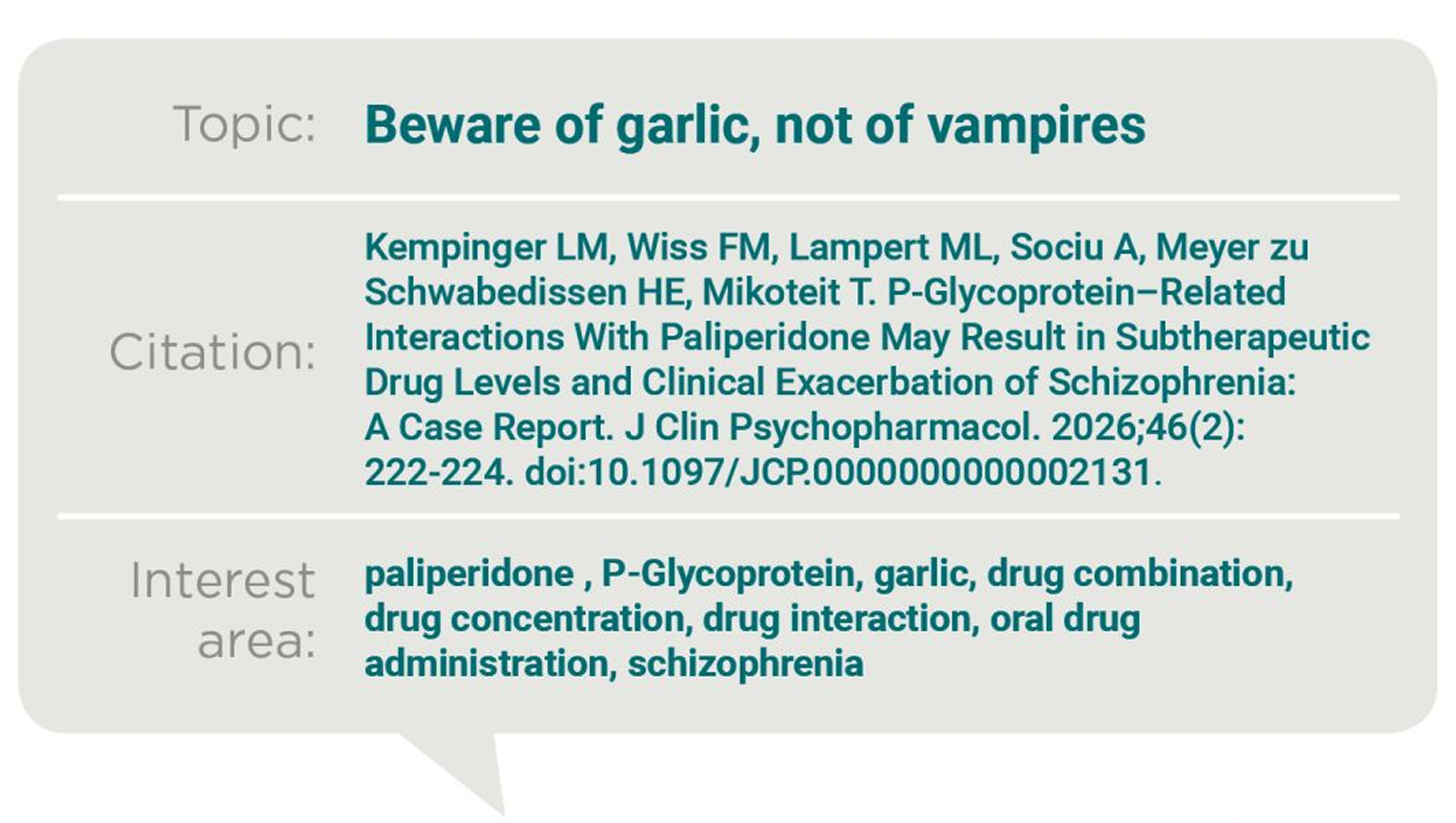
Citation:
Kampinee LM, Wiss FM, Lampert ML, Soós A, Schwebel F. P-Glycoprotein, garlic, drug concentration, paliperidone. J Clin Psychopharmacol. 2026;46(2):222–224. doi:10.1097/JCP.0000000000001787