

Quality Control in Medical Literature Monitoring at MS Pharm
Ensuring consistent quality in medical literature monitoring is not a one-time task—it is a continuous, structured process. At MS Pharm, quality control (QC) is embedded into daily operations to ensure accuracy, compliance, and reliability of safety reporting.
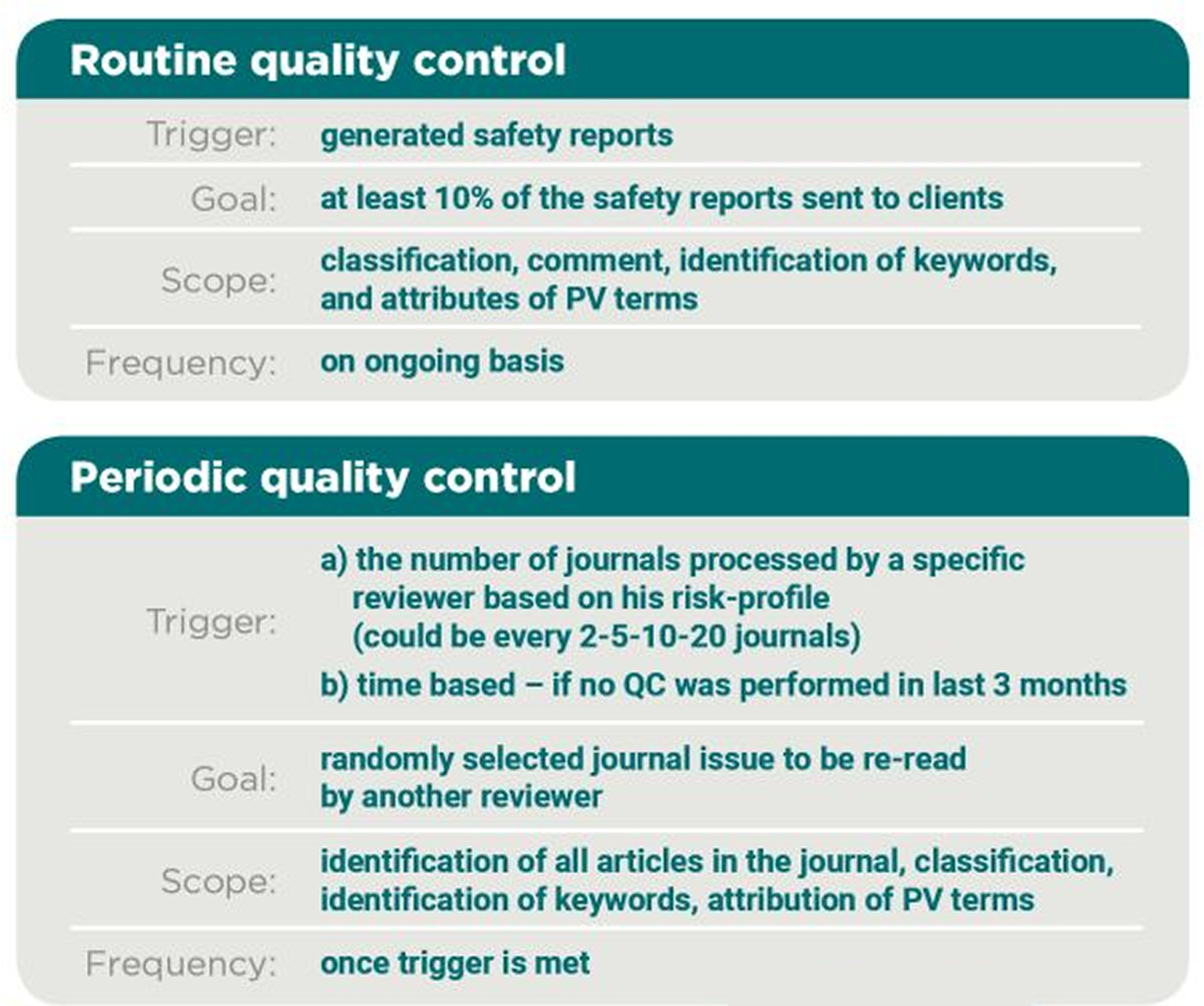
Two complementary QC approaches
To maintain high standards, MS Pharm applies two types of quality control: routine QC and periodic QC.
Routine Quality Control
Routine QC is performed on an ongoing basis and is directly linked to generated safety reports.
At least 10% of reports delivered to clients are reviewed, focusing on:
- classification accuracy
- quality and relevance of comments
- correct identification of keywords
- proper attribution of pharmacovigilance (PV) terms
This ensures consistency across outputs and alignment with regulatory and client expectations.
Periodic Quality Control
Periodic QC provides a deeper, independent review layer.
It is triggered either:
- based on reviewer activity and risk profile (e.g. after a defined number of processed journals), or
- on a time basis, if no QC has been conducted within three months
A randomly selected journal issue is re-evaluated by another reviewer, with focus on:
- completeness of article identification
- correct classification
- keyword accuracy
- appropriate PV term attribution
A structured approach to quality
By combining continuous monitoring with risk- and time-based verification, MS Pharm ensures both ongoing oversight and independent validation of its processes.
Conclusion
Quality control in literature monitoring is not just about meeting regulatory requirements—it is about maintaining precision, consistency, and trust.
At MS Pharm, QC is an integral part of delivering reliable pharmacovigilance services.