

A Physician Performs His Own Surgery Under Epidural Anesthesia
A recent case highlights an unusual and controversial clinical scenario — a physician performing abdominal surgery on himself under regional anesthesia. 🏥
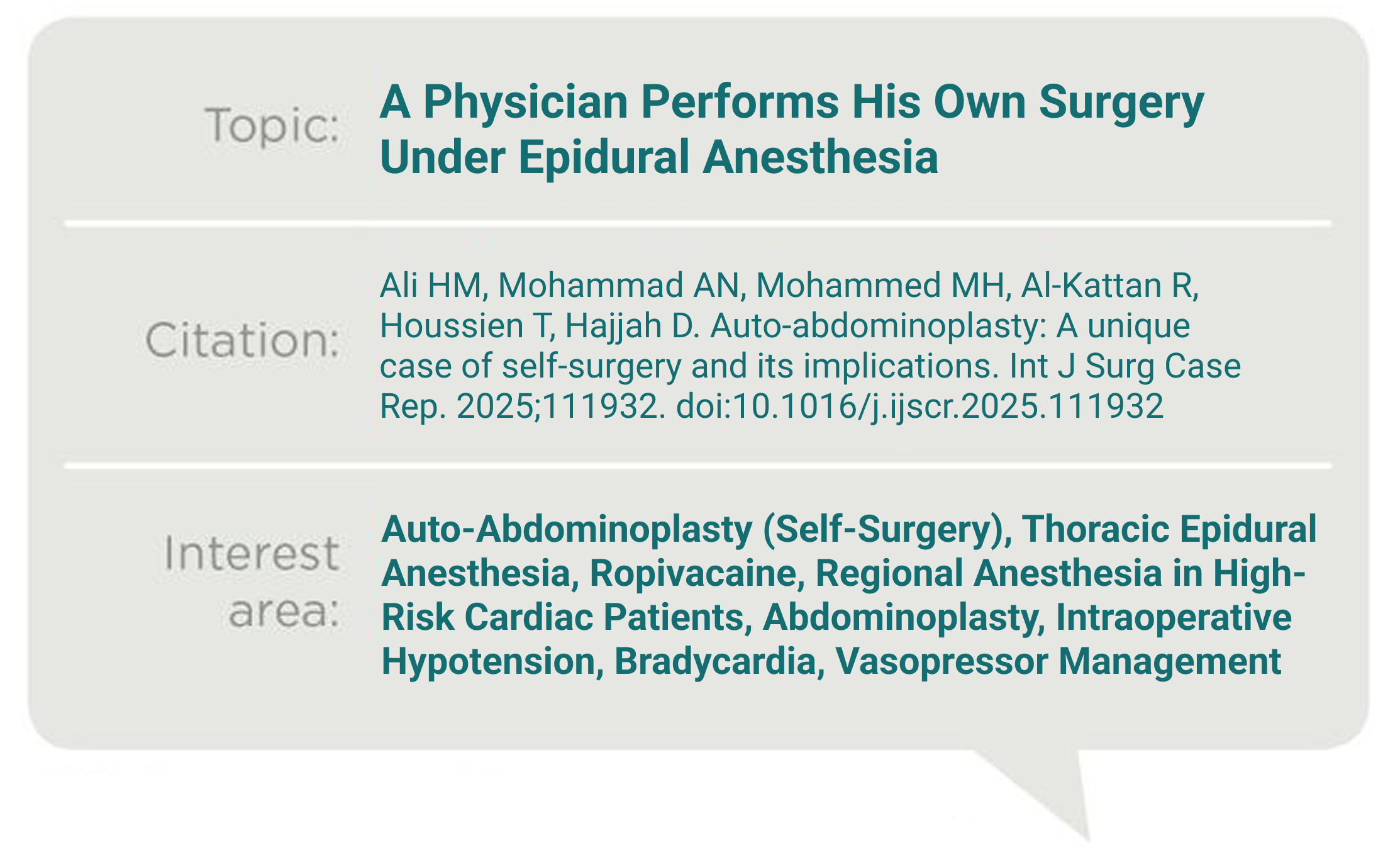
A 40-year-old obese physician with multiple cardiovascular risk factors sought abdominoplasty following significant weight loss (145 kg to 90 kg). Despite improved metabolic control, several surgeons declined to operate due to high cardiac risk. As a result, the physician decided to perform the procedure himself.
The surgery was conducted under thoracic epidural anesthesia with ropivacaine, selected for its lower cardiovascular risk profile. The procedure included extensive abdominal dissection, umbilical repositioning, and wound closure using sutures and staples. A standby plastic surgeon was present in case of complications.
During the procedure, the patient experienced hypotension (85/46 mmHg) and bradycardia (HR 48/min), managed with atropine, ephedrine, and fluid administration. Recovery was uneventful: return to work within 5 days, staple removal after 10 days, and satisfactory surgical outcome.
Scientific takeaway: 🧠
This case illustrates how tailored anesthetic strategies can reduce perioperative risk in complex patients. The use of regional anesthesia in high-risk cardiac patients deserves careful consideration in clinical decision-making.
Unofficial takeaway: 😅
While clinically successful, self-performed surgery remains highly unconventional and raises ethical and safety concerns. Sometimes the most unusual cases teach us the most about the limits of surgical autonomy.
Citation:
Al HM B. Piše takó pro nás! Auto-Abdominoplasty, Thoracic Epidural Anesthesia, Regional Anesthesia, High Cardiac Risk, Ropivacaine. Anesthesia Case Reports. 2025